Home
Destinations
Map
Resources
Articles
FAQ
About
Home
Destinations
Map
Resources
Articles
FAQ
About
Now:
Taipei
Next:
Shanghai
Linkedin
Reddit
Download on the App Store
Some of these trips are now more than 3 years old. If you notice any inaccuracies, or a coffee shop has sadly closed down, please get in touch.
Intro
Should you go?
Summary
Where to stay
Where to work
Remote work visa
Safety
Off work
Duration & season
Food & drink
People
Exercise
Verdict

Taipei

{Temperature}
°C ·
[Description}
World time zone API code-->
{Temperature}
°C ·
[Description}
World time zone API code-->

For fans of noodles, hiking and rainclouds, in equal measure.

The compact, orderly capital of one of Asia's most advanced democracies.

A city of 2.5 million surrounded by mountains and subtropical greenery, quietly powering a disproportionate share of the global technology supply chain from an island smaller than the Netherlands.

Taiwan
Feb 2026
New Taiwan Dollar (TWD)
1 month

TPE & TSE

2.5 Million

Should you go?

Worth it if in the area.

Worth it if in the area.

Worth it if in the area.

Worth it if in the area.

Should you visit Taiwan? Absolutely. Should you put all of your eggs in one basket staying solely in Taipei? I'd think twice. You can get most of the same experience elsewhere in the country with more affordable accommodation and mitigate the worst of the weather.

💰 Great value
🧳 Would like to return

Summary

Taipei had eluded me for several years. Between the ongoing regional tensions and a lack of any clear guaranteed period of dry, hot and sunny weather during the calendar year, it had been somewhere easy to deprioritise.

Having already been on the continent, spending the preceding three months in Bangkok, there didn't seem a better time to head further east and see what's on offer.

84
74
82
56
Total:
Accommodation
Bad
Ok
Good
Great
56
%
info
New legislation
Recent changes introduced by the Turkish government has made short-term rentals for under 100 days more restricted. Keep an eye on Reddit threads for up-to-date assessments of how the new legislation is impacting short-term rentals in practice.

Airbnb is underwhelming in Taipei. Perhaps not quite to the same extent as somewhere like Tokyo, but at a price and quality level that is by no means enticing. Accommodation for this month would've been comfortably the most expensive I'd taken at any point, without much quality to show for it.

I stayed at an apart-hotel called Little Minsheng in Songshan, which on arrival felt more like a converted set of former commercial offices than dedicated apartments. I'd recommend it for a week-long stay. It was clean, well managed and relatively spacious, but for anything longer it's missing some amenities that make an extended stay more comfortable.

Apartments are small and expensive. Demand is high and supply scarce.

The good news is that these prices represent something of an anomaly within your wider budget. The cost of accommodation feels entirely disconnected from the day-to-day costs you'll encounter in the city, and diverges just as sharply from what you'd pay elsewhere in the country.

Given you can have just as authentic a Taiwanese experience at a £35-a-night hotel in Kaohsiung as a £50-a-night Airbnb studio apartment in Taipei, it makes the city feel particularly poor value for a longer stay.

And this shouldn't be confused with a comparison between, say, London and a provincial UK city like Norwich, where any financial saving on accommodation would be to the detriment of the experience. Your accommodation budget will go a lot further outside Taipei, and there's little reason not to exploit that.

‍

Places to work
Bad
Ok
Good
Great
84
%

Out of anywhere I've visited in the last few years, Taipei was the sole city where I found it impossible to settle into a consistent daily rhythm. Even after visiting ten or more spaces, I struggled to land on a regular spot to work from.

The city has no shortage of places geared up for it. In fact it's one of the more work-friendly cities you'll come across. Yet nothing quite matched my rather specific requirements of abundant natural light, large tables, plentiful toilets and late opening hours.

‍

ALL DAY ROASTING COMPANY - This is where I eventually settled on as my primary workspace which I've written about in detail further below.

WeWork - My intention was to work from here for the month. However the Taiwan business now falls under WeWork China rather than WeWork Global, which means if you have an All Access Pass you're limited to ten visits per quarter. These have to be booked manually through their support team by email, and access is restricted until 6pm. Unlike other WeWorks with fixed end times, this is a hard out at 18:00, with staff promptly chasing you to return your ID and vacate the building so they can end their day. It's actually a great place to work from. There's plenty of natural light, it's in the middle of the Xinyi commercial district and never that busy. But it's just not worth the hassle. If there's one benefit of WeWork access it's convenience and reliability, and you'll get neither with how this is set up for international guests.

‍

CE' & LIB-RARY 遼寧店 - An interesting concept. It combines a ground floor cafe, with a library and coworking space across the upper two floors. Access to the working area on the third floor costs 140 NT for the day, with unlimited espresso drinks included, making it exceptional value by every measure. The drawback is the complete silence. I could sense mild agitation from the book-readers in the room at the faintest sound of a chair scraping as you attempted to stand up. Perfect if you don't need rock-solid internet and have no calls to take. Open until 9:30pm.

Plats Work & Coffee - Another novel concept. Entirely unmanned, you receive a QR code on booking which grants you access, with payment by card at the end of the session. Again great value, at around 180 NT for 4 hours, but the near-total silence makes it impractical if you need to take calls at any point. Clean, well maintained and with robust internet.

SkyCo Nanjing Fuxing - Likely your best option if you want a dedicated coworking space around the Songshan area. I came close to signing up but decided against it after finding the air conditioning shuts off at 6pm, and the space already felt stuffy when I visited mid-afternoon. Good quality interior in a solid location. Other branches across the city.

Starbucks Reserve - Starbucks is generally one of the last places you'll find me recommending as a serious workspace, but if you need somewhere with minimal fuss around Da'an, this one is worth serious consideration. Possibly the largest outlet I've ever set foot in, with large tables and power sockets set up, open until 10pm daily with reliable speeds of 80mbps or above.

‍Sky Cofi - Part of the SkyCo coworking space, occupying the top floor of the office building and open to the public. Pay as you go with a minimum spend per hour. Or there is a day pass with unlimited drinks for around 400 NT. No proper desks, so you're working from stools on elevated tables, but it's lively and ambient if you need somewhere to take calls throughout the day.

The Common Table - A coworking-focused cafe opposite the Taipei Dome. I'd have spent more time here had it been closer to where I was staying. The best internet speeds I encountered in the city at 600mbps or above, with large, purpose-built desks set up for working against the windows. Operates a minimum spend policy across a two-hour window, open until 6:30pm.

FutureWard Central - Worth skipping. Situated in the basement with little natural light, it had the atmosphere of somewhere you'd struggle to get through a full working day.

JustCo - Arguably the nicest dedicated coworking space I looked at, but the sign-up process felt needlessly bureaucratic for a short stay, requiring a call with their sales team and a two-month deposit. Worth investigating if you're planning an extended stint in the city, but not if you're passing through.

Value
Bad
Ok
Good
Great
82
%

If you are looking at your costs over the course of a month, Taipei is something of a mixed bag.

The one place you will notice a substantial difference is the cost of eating out. Food is remarkably inexpensive.

A simple rice or noodle meal, or an assortment of breakfast items in a local restaurant, can cost under NT$100 (£2.35). Larger sit-down lunches at a casual Korean, Japanese or Vietnamese place routinely come in at around NT$200 (£4.70), with generous portions and a quality you'd pay several times over for in Europe.

As someone who almost universally eats out at all times of the day, when you look back over the course of a month you will no doubt feel this saving compound. Or, more likely, end up returning home several kilos heavier after squeezing in an extra couple of daily meals.

Rides on the MRT cost around NT$20 (£0.47), with longer journeys on local trains not too much higher. Travelling around the country via the High Speed Rail network comes at a price that might only get you from Stansted Airport to Liverpool Street in London.

When it comes to coffee and drinks from bars, prices begin to mirror or even exceed what you might expect to pay in Western Europe. Under 500ml of craft beer at NT$360 (£8.40) could quite feasibly cost several multiples the price of your lunch. Dine-in prices at coffee shops tend to factor in seat time, with maximum stay limits or minimum spend restrictions often applied.

You will likely need to overbudget on accommodation given the scarce supply and high prices, but you can quite feasibly balance that over the course of the month assuming you are not surviving on a nightly diet centred around triple-hopped IPAs.

‍

info
The yen is currently at a 34-year low
While this is undoubtedly a negative for the Japanese, it makes for an exceptionally good time to visit Japan from abroad. Although this trend is unlikely to reverse significantly in the short term, it's still worth checking before visiting.
Read more
Excitement
Bad
Ok
Good
Great
74
%

Taipei has what I could best describe as a modest charm. Even its biggest fans would likely stop short of proclaiming it among the world's greatest cities.

Its personality is orderly and functional. Its character is measured and mature. It lacks the frenetic energy and immediacy of its Southeast Asian counterparts like Bangkok and Ho Chi Minh.

It doesn't feel like a city yearning for global recognition. It's somewhere entirely content with its place and purpose. A home for its residents to live and work rather than putting on a show to entertain.

Looked at strictly through the narrow lens of its urban environment, Taipei is underwhelming by global standards. When the clouds and rain settle in for a prolonged stretch, there can feel very little to justify your presence. Navigating between its near-identical blocks of commercial buildings and often drab building stock can feel unrewarding.

Yet when the clouds lift, it becomes an entirely different proposition. Hiking requires next to no effort or preparation, with an array of trails easily accessible from almost anywhere within the metropolitan area. Hundreds of kilometres of cycle paths lining the flood defences along the city's rivers make for perfect routes into its suburban fringes. The  night markets and city parks carry a renewed energy as larger crowds are drawn out.

If you can magically time the weather, Taipei has a lot to offer. But it's worth building in the flexibility to change your plans should the weather have other ideas.

Working hours

Taiwan observes National Standard Time (NST), which is 8 hours ahead of Greenwich Mean Time (GMT). Unlike the UK, Taiwan does not observe daylight saving time, meaning the gap narrows to 7 hours during British Summer Time. If you have some flexibility with your working hours and are happy to finish towards 11pm it gives you a good degree of overlap with European colleagues.

🇪🇺 Consider working European hours from Asia?
I've written a guide on how to structure your day to get the most out of the time difference.
Read article
Do you need to speak Spanish?
Without doubt, being able to speak Spanish with a degree of fluency is a huge asset when visiting South America. I had always put off visiting the continent due to my Spanish skills not extending beyond requesting a "cerveza grande".

But even with my incredibly primitive linguistic capabilities, it was not in any way to the detriment of the trip. English is spoken sparsely, but armed with a few phrases, some polite enthusiasm and a translator, it shouldn't deter you from visiting.
Do you need to speak Portugese?
After spending 10 weeks speaking (limited) Spanish across the rest of the continent, I struggled arriving in Brazil.

While I was far from conversational in Spanish, I quickly realised when I stepped out of the airport my vocabulary didn't extend a single word beyond 'Obrigado!'.
‍
In general, English is generally spoken incredibly sparsely. The most flowing interaction I had ended up being with an Uber driver where we periodically shouted out the names of Brazilian footballers playing in the English Premier League.

You can scrape by for a couple of weeks, but if you're planning on staying longer, I'd 100% recommend learning some basics to get the most out of the experience.
Ximen is comfortably the most energetic area of the city at the weekend, with a similar ambience to Myeongdong in Seoul or a less rowdy Shibuya in Tokyo. Popular with younger crowds for shopping, there's no shortage of places to eat, with the historic Dihua Street only around a 10-minute walk north.
Night markets act as the central pillars of Taiwanese evening entertainment. Every night across the city you'll find traders selling all manner of local delicacies from around 5pm, generally through until midnight. The selection tends to be fairly predictable from one to the next, but it's worth visiting several to get a feel for different areas. Bring cash and some flexibility from your usual dietary requirements.
A short walk south of Ximen is Longshan Temple, built in 1738 by settlers from Fujian during the Qing Dynasty and one of the most visited sites in the city. Definitely worth passing by if you're in the area. If visiting in the evening, it's worth the extra walk down to Nanjichang Night Market, which was one of my favourites.
The vegan and vegetarian buffets found across the city were one of my most surprisingly enjoyable culinary discoveries of the month. You either pay by weight or for a set number of items, picking from a range of well-dressed vegetable and soy-based dishes. Ordinarily, a selection of cabbage and tofu would be of little interest to me, but these exceeded all expectations.
More than elsewhere, Taipei felt particularly dismal in the rain. The northeast monsoon funnels cool, moisture-laden air across the East China Sea which settles over the city, creating prolonged spells of low cloud, heavy mist and puddle-laden streets. The first ten days looked almost exclusively like this.
🔎
November 2024 Fact Check
Given the instability in Argentina over the past few years, I found that most advice on key topics, even if written within the last 12 months, bordered on being dangerously outdated.

I have attempted to summarise some of the most misleading points I encountered.
"Nowhere accepts card"
Incorrect
Card availability is now excellent across the city. Even if you are purchasing a single empanada, bananas from a greengrocer, or buying cans of beer off a man in the street before a football match. Some businesses may offer a 10% discount if you use cash, or charge a small surcharge for card payments.
"It's difficult to get a SUBE card"
Incorrect
This was true in recent years, as there had been a shortage of the cards across the city due to a lack of the plastics needed to create the card. I had no problems going to the nearest off-licence and getting a card on my first attempt. It's worth asking your Airbnb host who may have a spare.
"Buenos Aires is cheap"
Incorrect
The biggest misconception that may still linger, even if you are reading articles from 2023. If planning on eating out heavily, then expect European prices or even higher on more imported day-to-day goods. Eating out aside, day-to-day expenses are still good value by global measures.
"Bring dollars with you"
Partially true
This advice would continue to make sense for Americans who already have dollars, but I wouldn't recommend making an effort to purchase with the intent of exchanging them on the ground. Collecting money via Western Union was convenient and good value, which I would recommend to anyone visiting from outside the US.
"Make sure you get the blue-dollar rate"
Partially true
The dramatic stabilisation of the peso by late 2024 means that this difference is nowhere near as significant as it was 12 months ago. At the time of writing, there was only a 10% difference between the official and blue rate. If you are only in the city for a short period you may not even have to grapple with this.
"Restaurant service is poor"
Partially true
I did see some evidence of this, especially in cheaper,  traditional restaurants. In comical fashion, drinks would not appear or the bill would never materialise. In more contemporary outlets, it was never a problem.
"It is a football mad city"
True
There is absolutely no doubt that this is as true as ever in 2024.

Where to stay

With a weak Airbnb market, if you're planning a month-long stay you won't be issued the luxury of being overly picky about where you base yourself.

The good news is that on the ground Taipei feels relatively uniform. Your experience of the city isn't likely to differ too radically depending on wherever you opt for.

With no meaningful reduction in nightly rates for longer bookings, you could consider splitting your time across a number of areas to see if anything resonates particularly well.

Worth noting that each of these areas listed are enormous.

Songshan
Recommended
Would avoid
I stayed in a predominantly residential part of the Songshan district, close to Minsheng Park. It's hard to recommend if you're looking for somewhere with any night-time ambience. After 10pm the streets are deathly quiet, with scant options for late-night food, and even busier roads like Nanjing Road lose all footfall. With all that said, it's a pleasant place to stroll around during the day, with a good selection of local restaurants and coffee shops. Its proximity to the Keelung River cycle path is a strong positive if you plan to make regular use of it, and there's no shortage of gyms and coworking spaces within easy walking distance.
SkyCo Nanjing Fuxing
Da’an
Recommended
Would avoid
What felt like one of the stronger options to base yourself. It doesn't feel radically different from the other areas mentioned, but has one of the strongest selections of cafes and bars, with the added benefit of Da'an Forest Park on its doorstep. You're well-positioned between Ximen and Xinyi, making getting across to other parts of the city convenient. There's also a noticeably strong expat presence here, particularly around the university area, compared to other districts. Somewhere I'd look to stay within walking distance of if returning in the future.
Block²
Ximen
Recommended
Would avoid
If you happened to be visiting for a weekend and wanted to be in the thick of the busiest and most vibrant part of the city, place yourself close to Ximen in the Wanhua District. Out of anywhere in Taipei this is the only area that feels like a genuine tourist hub. This commercial district feels something like a lite version of Shibuya or Shinjuku and there isn't anything quite like it elsewhere in the city. If you're looking for a longer term base then better to look elsewhere, but it's an ideal spot for a short stint. Worth taking a stroll through Dihua Street and stopping by the Dadaocheng Wharf Container Market.
SkyCo TS
Xinyi
Recommended
Would avoid
Xinyi is one of the largest commercial districts in the city, home to the towering Taipei 101, recently featured in a Netflix climb. The central part of the district was the target of a redevelopment plan in the late 1990s, giving it a noticeably newer feel, with modern shopping malls and glass office towers. It also acts as a hub for nightlife, with craft beer bars and clubs clustered around the area. A good place to base yourself, if you can find suitable accommodation.
WeWork
Zhongshan
Recommended
Would avoid
What struck me as one of the better areas to stay if you're after some evening ambience past 10pm. The Shuangcheng Street Night Market operates seven nights a week, with a number of later-opening bars and restaurants in the streets just north of it. Home to several parks which connect to the riverside paths.
1921共享空間

Where to work

All Day Roasting Company
Top choice
☕️ Good Coffee
📍 Top location
🥗 On site cafe
🧍Community focused
⭐️ Quality fit out
🌳 Outdoor Space

After much trial and error, I settled on All Day Roasting in Songshan as a reliable afternoon workspace, around a 15-minute walk from where I was staying.

It's one of the better cafe/coworking hybrids I came across in the city, with open-plan seating across a wooden-beamed industrial interior. The front is a conventional coffee shop setting with small tables and soft seating. Towards the back are two large benches, each comfortably accommodating up to eight people, purposefully set up for working.

There's subtle background ambience from the music and conversations at the front, enough to stop it feeling stale without compromising your ability to focus.

It's one of the later-opening coffee shops in the city, serving until 10pm, though the working area closes at 7pm, at which point you transition to the by-then quieter coffee shop seating. Prices are on the higher side for a quick coffee on the move, but considering you're getting a reliable workspace thrown in, it's great value. I would generally arrive around 2pm and leave towards 7, having worked through two or three coffees and one of their tasty cakes. There's no minimum spend unlike other time-based spaces, and it's common to see others settled in for sustained periods. They stock a range of speciality beans for pour-over with a rotating selection.

Staff are friendly, welcoming and can converse in basic English. Not somewhere to rely on for a full working week, but if you want somewhere reliably ambient to split up your day and get things done, it's worth popping by.

Learn more open_in_new
Get one month free on a 12-month commitment
Flexible access to shared workspace in hundreds of locations globally. Explore hundreds of global locations, whether you need office space in New York or a meeting room in London.
Learn more open_in_new

Remote work visa

Remote work visa coming soon
A dedicated remote work visa is available for {$$$}.
This country is actively working on a visa support for remote workers.
There is currently no remote work visa available for this country.

Launched in January 2025 and upgraded a year later, Taiwan's digital nomad visa now allows stays of up to two years, built as an initial six months with three possible extensions.

Eligibility requires you to be from a visa-exempt country (the UK qualifies), earn at least USD $40,000 annually if you're over 30 (or $20,000 if under), and hold an average monthly bank balance of $10,000 over the past six months. Already hold a digital nomad visa from another country? That substitutes for the income requirement.

You can't work for Taiwanese clients, can't sponsor dependants, and need to stay mindful of the tax position if you cross 90 days. Under 183 days, there's no local income tax liability.

Processing takes five to eight business days. Apply via the Taipei Representative Office from outside Taiwan, or through the Bureau of Consular Affairs if you're already in-country on visa-free entry.

Worth knowing: the Employment Gold Card offers more, including an open work permit and national health insurance, but the eligibility bar is considerably higher. For most nomads, the digital nomad visa is sufficient.

Visa length
Visa cost
Earning requirements
Learn more open_in_new
To the best of my knowledge this information was correct as of October 2025. If you notice something has changed drop me a message and I'll update it! Citizen Remote is a great source of up to date knowledge for everything to do with remote work visas.

Safety

  • As safe and secure as anywhere you are likely to encounter in East Asia.You can feel comfortable routinely leaving laptops momentarily unattended in cafes, parking bikes outside convenience stores while you nip in, and generally extending a level of trust that would be deemed naive in most major Western European cities.

Off work

Hike in Yangmingshan National Park

One of the most enjoyable elements of visiting Taipei was the close proximity to some great hikes on your doorstep.

One of the best and most convenient options is Yangmingshan National Park, which you can see hovering to the north of the city between bouts of cloud, though during wetter periods it disappears entirely.

Even relying solely on public transport, it couldn't be easier to get to. Take the Tamsui-Xinyi Line north to Shilin station, walk a couple of minutes to the Fu Lin Elementary School bus stop, and several routes will take you up to the park in around 30 minutes, all payable with your EasyCard.

Once at the top you'll find a number of well-maintained hiking paths around dormant volcanoes, with hot springs, temples and plenty of options for lunch or coffee, with buses ready to take you back down.

The climb up to Qixing Peak was remarkable not just for the views from the top, but for the warmth of the welcomes from locals along the way.

Worth planning a trip up on a clear day if you have reasonable confidence it will stay that way.

Learn more open_in_new
No items found.

Duration & season

When it wasn't raining, the weather was as close to perfect as you might hope for visiting Taiwan. Days were mild, bordering on hot on clear days, making it ideal for hiking and cycling outdoors.

December is the most popular month for tourism in Taipei, but with sunsets just after 5pm it wouldn't be a time of year of any interest to me personally. I didn't hear many people speak positively about the increasingly humid, wet and typhoon-prone Taiwanese summer, which generally stretches from May to September.

If you are considering visiting Taipei, I would suggest approaching it differently to a conventional one-month Airbnb stay, for a few reasons.

Airbnbs are not great in the city. They are expensive, small and poor value compared to what else you will find in the region. You could also quite feasibly find yourself stuck through a prolonged spell of bad weather. Taipei simply isn't worth hanging around in the rain and murk if you don't have to and are on a limited time schedule.

With all this in mind, treat it as an opportunity to explore the entire country. Build in a degree of flexibility and make the most of the ability to get between cities quickly and cheaply.

Outside Taipei, hotel prices become incredibly good value. In the other large cities of Taichung, Tainan and Kaohsiung, expect to pay around £35 a night for a quality hotel room in the city centre. I spent five nights across those three cities and you could easily spend a week in each, and that's without touching the more rugged and rural eastern coast. You can easily wake up one day, have a leisurely morning, take a regional train to the next city and be at your desk by 2pm without any stress. I was intentionally choosing hotels with good open-plan lobby spaces to work from, which provided a better working setup than anything I found in Taipei.

The south of the country generally sees much milder conditions. It can be a postcard-worthy, clear-blue-skied 26-degree day just 140 minutes away in Kaohsiung via the HSR.

Assuming you get a bout of good weather, there's otherwise more than enough on hand to warrant a month in Taipei. But if you're on a tight time schedule, there are better ways to spend it than dodging the rain in Taipei.

Food & drink

皆大歡喜經典素食
Zhongsan
This would rank at the top of all the vegan buffets I ate across the city. Expect around 30 dishes, with plates priced by weight. A generous portion should come in well under £3. Expect stir-fried bok choy, braised tofu, noodles and heavily seasoned salads. Worth a visit for even the most committed carnivores.
Top choice
Laptop friendly
五湖豆漿
Zhongshan
Look no further if you want an authentic Taiwanese breakfast experience, served outside on steel tables and stools. Join the lengthy but fast-moving queues to pick up dan bing (egg crepes), turnip cake and dumplings, washed down with doujiang (warm soy milk). Pick up two or three items if you're eating alone, depending on appetite.
Top choice
Laptop friendly
Patty Addy Burger
Da'an
If you want a momentary break from Asian cuisine, head to Patty Addy for what is without doubt one of the thinnest, crispiest smashed burgers you're likely to encounter in the whole of Taiwan. Tasty and reasonably priced for the quality. 
Top choice
Laptop friendly
hierin coffee
Songshan
One of the best coffee shops in Songshan, with some of the strongest value pricing in the area. Small, minimal interior with seating outside, run by a friendly couple.
Top choice
Laptop friendly
小富士日式蓋飯咖哩屋
Songshan
21:27Small spot with around 8 tables, specialising in Japanese curry and open Fridays and Saturdays only. Cosy interior and a good refuge if the weather turns miserable. The owner is friendly and welcoming, though speaks Mandarin only, so come prepared. Served with complimentary miso soup and salad.
Top choice
Laptop friendly
GG吉季韓國美食餐飲房
Songshan
If you're after some authentic Korean cuisine, head to one of the GG restaurants, with three branches across Songshan. Expect generous portions with plentiful banchan on the side.
Top choice
Laptop friendly
Midway
Songshan
Pubs are in short supply around Songshan, but if you're looking for somewhere to stop in for a quick beer after work, Midway is well worth a visit. Almost impossible not to get drawn into conversation with the friendly mix of locals and expats propping up the bar alongside Linda the owner. Open until 3am, cash only.
Top choice
Laptop friendly
Exercise
Nangang Park
·
Run
A good alternative to Da'an for a longer run with more varied terrain and quieter paths. Nangang Park sits to the east of Songshan station and draws a fraction of the crowds you'll find closer to the city centre.
Da'an Park
·
Run
A large public park with a pond, amphitheatre, and a dedicated jogging loop of around 2.5km. One of the better options for a reliable running route in the city centre, though it gets noticeably busy at weekends.
Taipei Zoo -> Yinhe Cave
·
Head to Taipei Zoo station at the end of the brown line and you have a number of options. If you want to preserve energy, a gondola service runs from close to the MRT station up into the hills; otherwise it's around a 90-minute walk. Once up there, you'll encounter a range of temples and shrines, with the opulent Zhinan Temple the clear standout. By the time you reach the Maokong Gondola station there's a good spread of food and tea options. If you've still got legs, it's another hour or so to Yinhe Cave, where you'll find a dramatic waterfall and shrines etched into the rockface. Head back to the main road where local buses run regularly back into Xindian.
Elephant Mountain
·
Walk
If you're looking for a short hike to squeeze in before work, the trail up to Elephant Mountain from the Xinyi District is ideal. The path is well maintained and offers excellent views over Taipei 101 on a clear day. If you're feeling adventurous, you can peel off east towards Nangang Mountain, where some particularly challenging climbs await, with ropes and ladders to scale the rockfaces. Best avoided after any prolonged rainfall. Bring decent footwear if you're heading higher.
Qingtiangang Grassland -> Neihu
·
Walk
From the Lengshuikeng Visitor Centre it's around a 30-minute walk to the Qingtiangang Grasslands, which on the day I visited seemed to serve more as a backdrop for Instagram shoots than any serious hiking. Keep an eye out for the enormous water buffalo that graze the area. You can then begin making your way south towards the Neihu District via the Pingding Ancient Canal, where the paths thin out considerably, passing through a handful of smaller villages.
Mount Qxing
·
Walk
If you take the bus from Beitou to Lengshuikeng, there are a number of trails leading up to the summit of Mt. Qixing, the highest peak in the Tatun Volcano Group. The paths are well marked but demanding in parts, with steep ascents and slippery stone steps after any rain. Pick as clear a day as your schedule allows, otherwise the views down will be lost in murk. Worth stopping in at the Lengshuikeng Visitor Centre for a hearty bowl of Taiwanese beef noodle soup before heading on.
Yingge -> Bali
·
Cycle
A great option if you're looking for an uninterrupted journey solely on cycle paths. Take the local train from any of the Taipei stations, around 30 minutes south. From Yingge, pick up a YouBike and follow the riverside path as it reaches the Lujiao Creek Wetlands before turning through into New Taipei Municipal Park. The highlight is a particularly well-landscaped stretch running north, directly alongside the Tamsui River, finishing among the inevitable crowds at Bali Old Street. Nip across on one of the ferries into Tamsui itself, where you can grab the MRT back into the centre.

People

You will encounter expats in Taipei but generally at a much lower rate than in more typical remote work hotspots. Most I came across were involved in teaching roles within the city, with a handful of professionals also working for companies based in the country.

Craft beer bars and Irish pubs appeared to be the central hubs for expat socialising, and you'll inevitably find plenty of tourists at the main sites close to Ximen.

I left with a glowingly positive impression of the Taiwanese people. Even though English is commonly not spoken to any great depth, there was a continuous willing effort to compensate for my near-total absence of Mandarin. In more intimate settings such as restaurants or coffee shops, I found them expressing a great deal of enthusiasm and curiosity about what had brought you to their country. Interactions became increasingly warm on repeat visits to venues, and it felt easy to build something of a rapport, potentially due to it being a less transient city in general.

Exercise

Nangang Park
A good alternative to Da'an for a longer run with more varied terrain and quieter paths. Nangang Park sits to the east of Songshan station and draws a fraction of the crowds you'll find closer to the city centre.
keyboard_arrow_down
Da'an Park
A large public park with a pond, amphitheatre, and a dedicated jogging loop of around 2.5km. One of the better options for a reliable running route in the city centre, though it gets noticeably busy at weekends.
keyboard_arrow_down
Taipei Zoo -> Yinhe Cave
Head to Taipei Zoo station at the end of the brown line and you have a number of options. If you want to preserve energy, a gondola service runs from close to the MRT station up into the hills; otherwise it's around a 90-minute walk. Once up there, you'll encounter a range of temples and shrines, with the opulent Zhinan Temple the clear standout. By the time you reach the Maokong Gondola station there's a good spread of food and tea options. If you've still got legs, it's another hour or so to Yinhe Cave, where you'll find a dramatic waterfall and shrines etched into the rockface. Head back to the main road where local buses run regularly back into Xindian.
keyboard_arrow_down
Elephant Mountain
If you're looking for a short hike to squeeze in before work, the trail up to Elephant Mountain from the Xinyi District is ideal. The path is well maintained and offers excellent views over Taipei 101 on a clear day. If you're feeling adventurous, you can peel off east towards Nangang Mountain, where some particularly challenging climbs await, with ropes and ladders to scale the rockfaces. Best avoided after any prolonged rainfall. Bring decent footwear if you're heading higher.
keyboard_arrow_down
Qingtiangang Grassland -> Neihu
From the Lengshuikeng Visitor Centre it's around a 30-minute walk to the Qingtiangang Grasslands, which on the day I visited seemed to serve more as a backdrop for Instagram shoots than any serious hiking. Keep an eye out for the enormous water buffalo that graze the area. You can then begin making your way south towards the Neihu District via the Pingding Ancient Canal, where the paths thin out considerably, passing through a handful of smaller villages.
keyboard_arrow_down
Mount Qxing
If you take the bus from Beitou to Lengshuikeng, there are a number of trails leading up to the summit of Mt. Qixing, the highest peak in the Tatun Volcano Group. The paths are well marked but demanding in parts, with steep ascents and slippery stone steps after any rain. Pick as clear a day as your schedule allows, otherwise the views down will be lost in murk. Worth stopping in at the Lengshuikeng Visitor Centre for a hearty bowl of Taiwanese beef noodle soup before heading on.
keyboard_arrow_down
Yingge -> Bali
A great option if you're looking for an uninterrupted journey solely on cycle paths. Take the local train from any of the Taipei stations, around 30 minutes south. From Yingge, pick up a YouBike and follow the riverside path as it reaches the Lujiao Creek Wetlands before turning through into New Taipei Municipal Park. The highlight is a particularly well-landscaped stretch running north, directly alongside the Tamsui River, finishing among the inevitable crowds at Bali Old Street. Nip across on one of the ferries into Tamsui itself, where you can grab the MRT back into the centre.
keyboard_arrow_down
Yingge -> Bali
A great option if you're looking for an uninterrupted journey solely on cycle paths. Take the local train from any of the Taipei stations, around 30 minutes south. From Yingge, pick up a YouBike and follow the riverside path as it reaches the Lujiao Creek Wetlands before turning through into New Taipei Municipal Park. The highlight is a particularly well-landscaped stretch running north, directly alongside the Tamsui River, finishing among the inevitable crowds at Bali Old Street. Nip across on one of the ferries into Tamsui itself, where you can grab the MRT back into the centre.
Mount Qxing
If you take the bus from Beitou to Lengshuikeng, there are a number of trails leading up to the summit of Mt. Qixing, the highest peak in the Tatun Volcano Group. The paths are well marked but demanding in parts, with steep ascents and slippery stone steps after any rain. Pick as clear a day as your schedule allows, otherwise the views down will be lost in murk. Worth stopping in at the Lengshuikeng Visitor Centre for a hearty bowl of Taiwanese beef noodle soup before heading on.
Qingtiangang Grassland -> Neihu
From the Lengshuikeng Visitor Centre it's around a 30-minute walk to the Qingtiangang Grasslands, which on the day I visited seemed to serve more as a backdrop for Instagram shoots than any serious hiking. Keep an eye out for the enormous water buffalo that graze the area. You can then begin making your way south towards the Neihu District via the Pingding Ancient Canal, where the paths thin out considerably, passing through a handful of smaller villages.
Elephant Mountain
If you're looking for a short hike to squeeze in before work, the trail up to Elephant Mountain from the Xinyi District is ideal. The path is well maintained and offers excellent views over Taipei 101 on a clear day. If you're feeling adventurous, you can peel off east towards Nangang Mountain, where some particularly challenging climbs await, with ropes and ladders to scale the rockfaces. Best avoided after any prolonged rainfall. Bring decent footwear if you're heading higher.
Taipei Zoo -> Yinhe Cave
Head to Taipei Zoo station at the end of the brown line and you have a number of options. If you want to preserve energy, a gondola service runs from close to the MRT station up into the hills; otherwise it's around a 90-minute walk. Once up there, you'll encounter a range of temples and shrines, with the opulent Zhinan Temple the clear standout. By the time you reach the Maokong Gondola station there's a good spread of food and tea options. If you've still got legs, it's another hour or so to Yinhe Cave, where you'll find a dramatic waterfall and shrines etched into the rockface. Head back to the main road where local buses run regularly back into Xindian.
Da'an Park
A large public park with a pond, amphitheatre, and a dedicated jogging loop of around 2.5km. One of the better options for a reliable running route in the city centre, though it gets noticeably busy at weekends.
Nangang Park
A good alternative to Da'an for a longer run with more varied terrain and quieter paths. Nangang Park sits to the east of Songshan station and draws a fraction of the crowds you'll find closer to the city centre.

Verdict

Positives
  • English is spoken widely, with varying degrees of confidence.Unless you have some familiarity with Mandarin and traditional Chinese script, which I certainly did not, Taiwan has the potential to be one of the more challenging destinations you will visit. Among the younger generation in particular you will find most people are happy to engage with whatever level of English they have. With Google Translate on hand to decipher menus, and a willingness to issue enthusiastic ni-haos and xièxiès, most day to day transactions worked surprisingly smoothly. Mandarin is the dominant language within Taipei, though elsewhere in the country you will encounter more Taiwanese Hokkien and various indigenous languages.
  • There are plenty of good-value gyms across the city.Taipei felt like somewhere with a genuine focus on health and wellbeing. I signed up to 給力健身 in Songshan, a 24-hour gym that cost under £30 for the month. Good quality equipment, never too busy and a straightforward sign-up process. Well worth it if you are based in the area. Basketball and Baseball are particularly popular national sports and you'll encounter people of all ages playing around the clock.
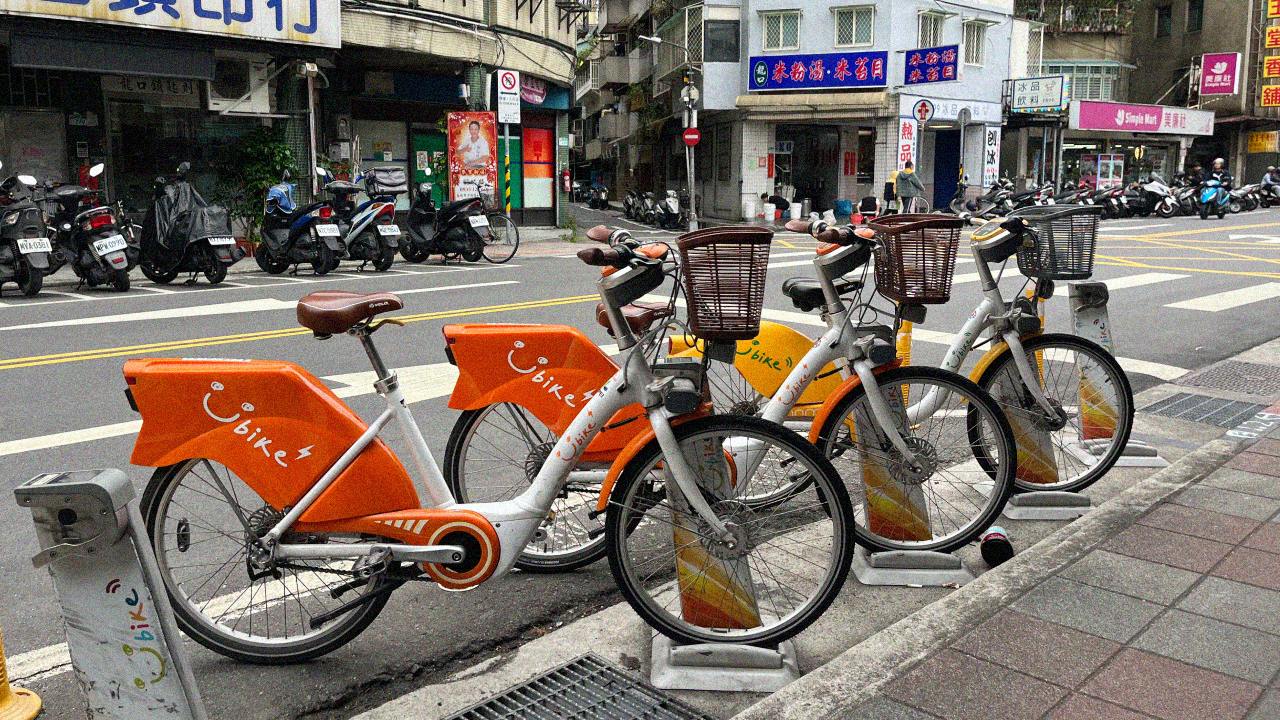
  • The YouBike scheme is a world-class piece of public infrastructure.I can't recall another city bike scheme operating so effectively at this scale. The availability of bikes across the city is remarkable, with stations extending well beyond the city centre to the outer reaches of every metro line. By the standards of comparable schemes, the bikes are light and easy to manoeuvre. Journeys under 30 minutes are free within Taipei, thanks in part to a city-level subsidy, with anything beyond that incurring a negligible rate of 10 NT per half hour. Even more impressively, it operates nationwide. Step off the train in Kaohsiung and you can use the same EasyCard to unlock a bike there. Whilst primarily intended for short intra-city journeys, the bikes are of a quality that you can easily churn out a 30-mile ride without any need to formally rent from a shop.
  • A diverse selection of national dishes to wade through.Aside from beef noodle soup, I had little prior knowledge of Taiwanese cuisine before arriving. If you are unacquainted, the breadth and variety on the ground may well surprise you. Taiwanese food bears many similarities to Fujian cuisine from southern China, whilst incorporating influences from across the region. Braised pork and oyster omelettes feature heavily alongside all the staples you might expect, like fried rice. Though it may not sound particularly appealing, cold noodles with sesame sauce was one of the standout dishes I sampled.. The popularity of vegetarian and vegan food somewhat surprised me. It is particularly well catered for across the city, with lunchtime buffets a popular option for office workers and the best place to acquaint yourself with a range of dishes, generally sold on a pay-by-weight basis.‍
  • Night markets are ideal places to explore more exotic offerings.With close to 30 of them dotted across the city, your nose will inevitably be attuned to the distinct and borderline offensive aroma of fermented stinky tofu long before you spot it wafting through the stalls. After a few visits you'll notice there's a relatively predictable bedrock of vendors, with chicken feet and chicken butt popping up regularly alongside gua bao, BBQ skewers and enormous fried chicken fillets. Come armed with cash. Of the ones I visited, Nanjichang would get my vote as the one to prioritise.
  • A paradise for fans of East Asian cuisine.Alongside the national dishes covered above, you've got one of the best selections of authentic regional food on offer anywhere in Asia. Japanese is particularly well represented, with countless teppanyaki outlets, shops specialising in Japanese curry, sushi bars and izakayas. I couldn't recall seeing as many Vietnamese restaurants anywhere else on my travels, with bánh mì being particularly popular. Regional Chinese cuisines such as Sichuan and Hong Kong-style cafes are well represented too, and if you need a break from rice and noodles there is no shortage of Italian, steakhouses and practically every other conceivable cuisine. All at a quality and price you will struggle to find elsewhere, and more often than not cheaper than in their countries of origin.
  • Excellent public infrastructure.Getting around the city by public transport is effortless, with a network of metro lines, local trains, trams and buses at your disposal. Fares are low, facilities modern and well maintained, and services frequent.
  • The rest of the country is easily reachable via the High Speed Rail network (HSR).With the 280km journey to Kaohsiung taking under two hours and costing under £30, travelling by rail in Taiwan is an absolute joy. The trains utilise the same Shinkansen carriages you will find in Japan and operate with an impressive frequency. Worth noting that if you are travelling between cities you may want to consider opting for the slower regional trains that leave from the city centres, rather than travelling out to the HSR stops which are often a fair distance outside the centre, as in Tainan and Taichung.
  • A friendly, welcoming audio identity.From the jingle that greets you walking through the door at Family Mart, to the melodic bleeps of the MRT turnstiles and the chime of a YouBike undocking, these small audio details leave a surprisingly positive imprint on daily life. Even the arrival of the garbage truck sounds particularly poetic.
  • You can very easily get into the rhythms of day to day life.No matter where you go in Taipei you are almost guaranteed a local experience. Aside from the predominantly tourist-facing areas around Ximen and Dihua Street, it felt practically impossible to wander into anything that could be deemed a tourist trap. In somewhere like Bangkok you may often question whether you are truly getting a local experience, given the glut of services geared towards expats and tourists in areas like Sukhumvit. In Taipei, the opposite is almost always the case.
Negatives
  • There are better places to be working European hours.By the time you wrap up around 10pm, Taipei has well and truly wound down and has done for several hours. Exploring the city at this time isn't a particularly rewarding activity, with footfall sparse and only a handful of places still open for eating and drinking. The night markets technically run until midnight but are very much on the wind down by 11pm. Compared to other cities in Asia, where there's some residual ambience in the air to keep your interest, the later working schedule felt more of a limiting factor than a benefit.
  • It's a truly miserable place in the wet.It wouldn't be an exaggeration to claim I despised the first ten days I spent in the city. The clouds were so dark and the rain so sustained it felt entirely feasible the sun may not return over the course of the month. These aren't indifferent, overcast days with isolated bursts of rain, but dreary, sodden and bleak spells where the pattern has well and truly settled in.
  • It's not the most visually engaging city.There's not a great deal to get excited about from an architectural perspective. Much of the older building stock could be best described as functional, with the typhoon-resistant metal shutters on the facades of buildings from the 1960s to 80s leaving a stark, unwelcoming aesthetic. At face value there's little to differentiate many of the back streets you'll wander through, especially during wet periods. The enormous elevated freeways that cut through the city, like the Civic Boulevard, seem to hollow out the streets beneath them rather than generating the kind of activity you see around Bangkok's elevated Skytrain
  • A shortage of Western-style pubs.Search for 'Pub' on Google Maps and it will initially appear like there's a glut of options spread across the city. Upon further inspection you'll discover most are smaller cocktail bars (where the city excels and has honed a strong reputation), KTV outlets or lounges, with only a handful of speciality beer bars thrown in. After finishing work at 11pm I love winding down the day with a beer, but this is not Taipei's forte.
  • Not a happy-go-lucky place.There's a subtle hint of bureaucracy which tends to pop up in day to day life. There's often confusion or soft astonishment that you didn't want to keep a receipt for your 90p protein shake from the 7-Eleven. My accommodation listed a lengthy list of fines and penalties for minor incidental occurrences which could very well arise over a month-long stay. Getting breathalysed on a push bike felt heavy-handed. It was the only WeWork I've found globally where no communal mugs or cups were provided. A friend who was in the city at the same time told me they had a formal inspection of their desk at a coworking space on their last day. There are good reasons for all of the above. Much of it traces back to a Confucian culture of collective fairness, where rules exist because people genuinely follow them, and the system functions precisely because of that. It is what makes Taiwan feel as well-run as it does. But it does in turn mean there are better places to let your hair down.
Tips
  • It's worth being aware of the country's history and recent geopolitical tensions.The spectre of some form of conflict with neighbouring China often feels like an inevitability when looking in from the outside. On the ground there was little outward acknowledgement of this, with the impression I got from locals being that the situation is a reality they have long lived with. I was half-expecting to see more overt displays of nationalism but there was little flag-waving aside from formal placements at government institutions. I spoke to Taiwanese people who happily live and work in mainland China. Others expressed no desire to ever visit or engage with the country. Taiwanese identity will always be impossible to disentangle from culture on the mainland and there didn't appear to be a uniform approach to the topic. Having some awareness of contemporary affairs would only be beneficial should it come up in conversation to avoid any faux pas.
  • Pick up an EasyCard as soon as you land.These multi-purpose IC cards cost 100 NT and can be bought at train stations and convenience stores. Once loaded, you can use one to tap in and out of MRT and local train services, release YouBikes and pay for incidental purchases at places like convenience stores and food courts.
  • Pick up a physical SIM card rather than an eSIM.If you want to use the YouBike scheme, the easiest approach is to link it to an EasyCard, which requires verification with a local Taiwanese number. Prepaid SIM cards are available in the arrivals hall at Taoyuan Airport and from Chunghwa and Taiwan Mobile in the city centre.
  • Worth clarifying which airport you are arriving at or departing from.Taoyuan is the main international hub, around 40km outside the city centre, whereas Songshan sits almost unbelievably close to the centre itself. Leave ample time if you need to travel between the two. If arriving into Taoyuan, the direct train to Taipei Main Station is the easiest option, with contactless payment available to tap in and out.
  • Download the local apps.LINE is the preferred messaging platform for most businesses, generally favoured over WhatsApp. Uber works as expected for taxis, and both Uber Eats and Foodpanda have solid coverage across the city for food delivery. The T-EX app is your best option for booking High Speed Rail tickets. Tickets are also available through Klook, but the process involves bundled purchases and unnecessary steps that make it more trouble than it's worth. Google Translate worked well for real-time Mandarin translations.
  • 'Bye bye' is a common parting phrase.I initially couldn't tell whether it was being used in some form of patronising tone, but quickly overheard it passing between locals and realised it is simply an English term that has fused into the everyday vernacular.
  • You may be wondering where New Taipei City is.Unlike New Belgrade or New Cairo, it isn't a separate physical location but the wider metropolitan area that fully encircles Taipei itself. I found it somewhat disorienting seeing signs pointing to New Taipei in every direction, though it makes sense once you realise it surrounds the city on all sides. The two are distinct administrative areas, with New Taipei actually holding the larger population of the two.
  • The weather can change on a whim.Even if the sky is bright blue when you leave the house, come prepared if you are planning a long day outside. At a moment's notice a thick drift of murk can roll in from the sea and quickly change the tone of the day. Weather reports felt particularly unreliable, useful only for a rough gauge of the week ahead.
  • Be mindful of local customs.There are dedicated queuing areas on the MRT which passengers follow without exception. In many smaller, more informal restaurants you may be expected to return your tray, cutlery and dishes. Pedestrian crossing signals are observed with a similar diligence. Eating is permitted on local trains and HSR services but not on the MRT.
  • You will still need to carry physical cash.For a country providing the bleeding-edge technology that powers much of the world's AI infrastructure, Taiwan is surprisingly resistant to fully embracing digital payments. Most coffee shops will accept card, but you will always need cash on you when visiting night markets, smaller cafes and restaurants. If staying for a longer period, you can get set up with LINE Pay and other local payment methods, but even larger purchases such as gym memberships and coworking spaces often expect payment in cash. With that said, Apple Pay is fully accepted with no minimum charge at 7-Eleven, FamilyMart and Carrefour, which will likely cover the majority of your incidental purchases.
  • Be careful if cycling after drinking.I was stopped and breathalysed while cycling at 23:30 on a Tuesday evening close to Songshan station, en route to a late-night snack. Blood alcohol limits are significantly lower than European equivalents, with a single beer likely enough to put you over the threshold. Fines are relatively modest, but you risk being banned from the YouBike scheme. (No fine was issued)
More from Japan
I loved everything about this trip to Japan. I've put together some thoughts on my entire stay in the country, which may come in handy if you are planning a visit soon.
Read article
Naha
Better known for tacos rather than kimonos.
Top choice
Tokyo
A surprisingly manageable stay in the world's biggest city.
Top choice
Osaka
Everything you need for an exceptional Japanese experience.
Top choice
Hiroshima
A sombre but worthwhile stopover for your itinerary.
Top choice
Fukuoka
An unremarkable start to Japan.
Top choice
Taipei's YouBike scheme is one of the best I've encountered. With a local government subsidy, the first 30 minutes are entirely free, with only a small charge after that. The bikes are well maintained, light and have become an integral part of the city's transport mix. Keep an eye out for the orange-framed electric YouBike 3.0s (pictured on the left) if you need some help pushing against the wind.
Once the clouds lift, Taipei comes alive outdoors. Parks fill with families at the weekend. The mountain ranges on the near horizon come into view. Cycle lanes fill with lycra-clad riders and YouBike plodders alike. The New Taipei Metropolitan park is an ideal place to soak it up, with the Chongxin Bridge Flea Market particularly popular on Sundays.
Most restaurants take orders via a paper form which you hand to staff. This removes much of the pressure of having to pronounce your order in Mandarin, but means you'll be leaning heavily on your translation app of choice to make sure you don't inadvertently order the chicken feet.
Head up to the coastal districts of Bali and Tamsui at the weekend, where ferries connect the two neighbouring towns. Both sides feature lively daytime markets full of traditional Taiwanese staples and older gentlemen belting out national karaoke classics.

Planning a trip to

Taipei

?

Specialised, long term insurance

Buy while abroad
Global coverage
Simple, online claims process
24/7 human support
If you're considering an extended trip abroad, you may want to consider dedicated travel insurance to ensure you have adequate protection.

Most conventional travel policies have a cap of 30 days continuous travel, which isn't ideal for prolonged periods away.

I've been insured with SafetyWing for the last 18 months and used it for a claim for the first time in February 2025.

The claim was approved in under 32 hours and the payment was made direct to my bank account in under a week.

By far the most efficient insurance process I've ever dealt with.
Sign up and get $20 off
Learn more open_in_new

Pick up cash globally with Western Union

If you're heading somewhere with extortionate ATM fees, consider sending yourself cash and pick up in person with Western Union
Register and earn £10
Learn more open_in_new

Get international data with an Airalo eSIM

A hassle-free alternative to physical SIM cards, with strong global availability
Get $3 USD off
Learn more open_in_new

Suggestions or improvements?

If there's anything you feel that could make these guides more useful, let me know
Leave a comment
open_in_new
Avatar image of author

Say hi !

If you've got any questions on any of the destinations or in remote work in general, give me a shout on Linkedin
Get in touch
open_in_new
All information presented in these articles was created to the best of my knowledge at the time of publication. Some links may take you to affiliate pages for services recommended where I may be entitled to a financial reward should you decide to make use of the services. Cookies are used to track the performance of the website and provide analytics on what's working and what's not. Thanks for reading ☕️
Reddit
Linkedin